Jamestown, Where the Ocean Remembers
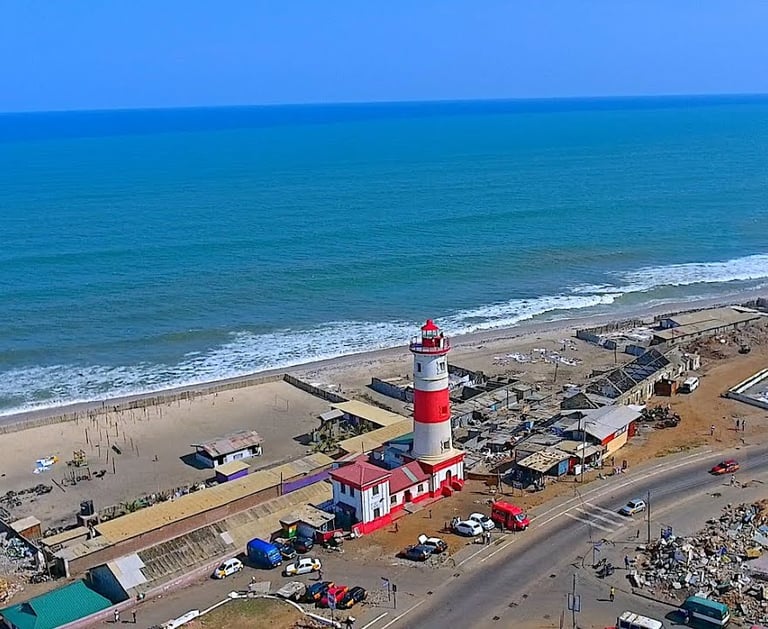
On the shoreline of Old Accra, the Jamestown fishing community stands at a crossroads. For generations, this coastal enclave has been a living archive of Ga history, artisanal fishing, and shared memory.
Since 2018, its transformation into a commercial fishing harbour has displaced long-standing residents and placed intense pressure on cultural practices tied to the sea (cf. Abrampah, 2021; Apoh & Gavua, 2016).
This website exists to tell Jamestown’s story and help safeguard the heritage that development must not erase.
Drawing on the work of historians, anthropologists, archaeologists, and local knowledge-holders (Nunoo-Amarteifio, 2015; Henderson-Quartey, 2002; Alcione & Ayesu, 2002; Parker, 2000; Grant & Yankson, 2003; Quayson, 2014; Wellington, 2011; Abrampah, 2021; Apoh & Gavua, 2016), this website is a digital space devoted to the heritage of the Jamestown fishing community.
Highlight Jamestown’s history from Soko and Aprang to Jamestown and Ussher Town
Showcase the fishing community as an intricate part of Ghana’s fishing heritage, a mosaic community, a home, and a cultural landscape
Centre Ga traditions and clan systems that continue to shape everyday life
Amplify local voices: fishers, families, elders, youth, and cultural leaders
Advocate for responsible development that recognizes resettlement, displacement, and heritage as deeply connected
Guardians of the Heritage
Our Aims
Jamestown is not just a place on a map; it is a living testimony to endurance, creativity, and the long relationship between people and the sea.
The Team
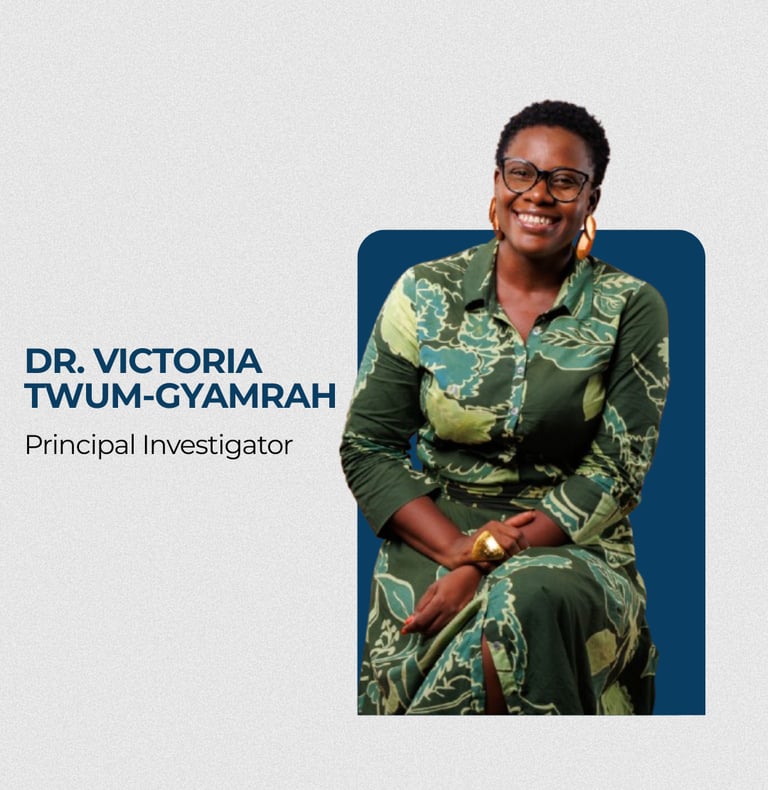
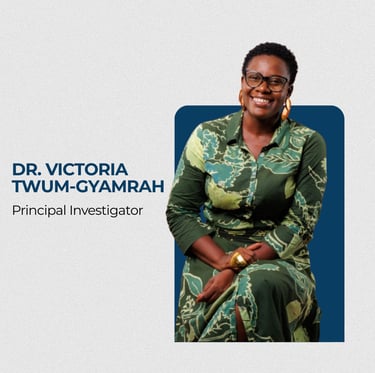
Victoria Twum-Gyamrah is a climate change researcher with extensive expertise in coastal environments, urban planning, and environmental justice. Drawing on MPhil and PhD research conducted in the coastal towns of Ada Foah and Jamestown in Accra, Victoria investigates the heritagization of fishing and the complex intersections between coastal heritage, development projects, and climate impacts in contexts marked by cultural, economic, and political contestation.
With over a decade of experience in climate research and education, Victoria specialises in designing rigorous, participatory research projects that co-create educational resources on climate change, gender, and heritage. Her work is distinguished by strong interdisciplinary methods that integrate qualitative, community-based, and curriculum-focused approaches to ensure that global climate debates are grounded in local realities.
Victoria has led innovative youth-focused research initiatives that use storytelling and collaborative methodologies to document lived experiences of climate impacts. These projects not only generate rich empirical data but also amplify the voices of young people, inform policy-relevant insights, and support more just and sustainable environmental futures. Through this portfolio of research, Victoria Twum-Gyamrah consistently bridges climate science, culture, and education to advance both scholarly understanding and community-driven action.
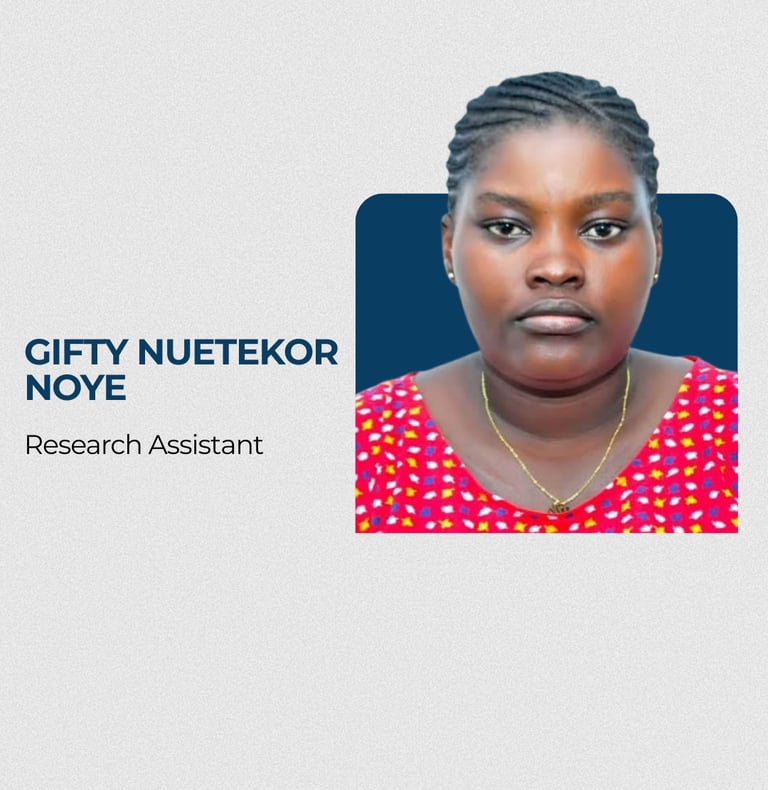
Gifty Nuetekor Noye is a research assistant working primarily in Jamestown and other parts of Accra, contributing to field-based studies focused on coastal communities, cultural heritage, and local livelihoods. Her work supports the documentation of everyday experiences, social practices, and community dynamics, helping to bridge the gap between academic research and lived realities within historically significant coastal environments.
In addition to her research role, Gifty is a certified tour guide affiliated with the Greater Accra Regional Tour Guide Association and the National Tour Guide Association. Through her guiding work, she plays an important role in interpreting and communicating the historical and cultural significance of sites within Accra, particularly in coastal communities such as Jamestown, where heritage, identity, and tourism intersect.
Gifty also brings a background in first aid and healthcare, which strengthens her capacity to support fieldwork in dynamic and community-based settings. Her combined experience in research, cultural interpretation, and community engagement positions her as a valuable contributor to projects that aim to preserve heritage, promote awareness, and ensure that local knowledge systems remain central to conversations about development and sustainability.
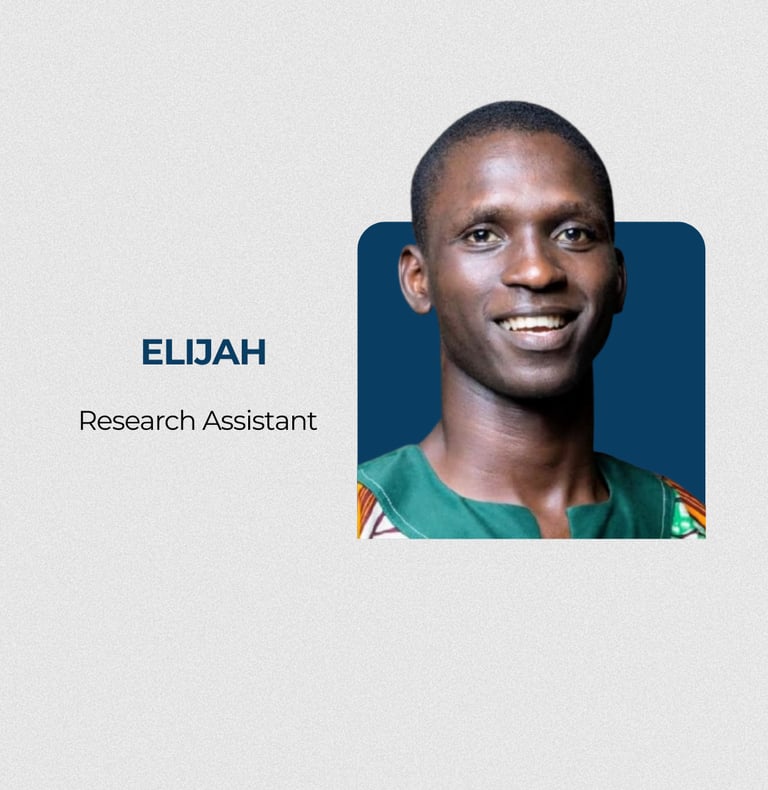
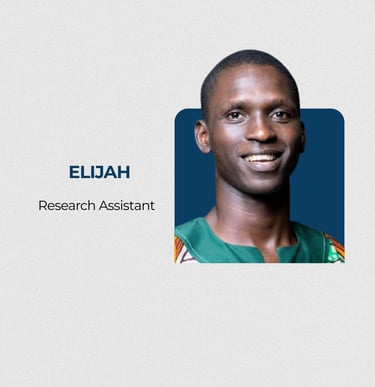
Elijah is a highly skilled and experienced individual with a strong background in theatre arts, production management, and education. Born and nurtured with Ga culture and traditions to the Vanderpuye lineage of Otublohum, Ussher Fort, Ga Mashie. He presently works in various capacities, as a stage manager, actor, programs coordinator, culture officer, drama instructor, production assistant, and production manager. Elijah has also worked in both private and public sectors, such as Roverman Productions, Studio HD Video Streaming, Mido Productions Ltd, National Commission on Culture, and the University of Education, Winneba.
Throughout his career, Elijah has demonstrated a strong ability to coordinate production logistics, facilitate activities, implement programs, and lead teams. He is a strong communicator and a team player who is able to work effectively with minimal supervision. Additionally, is a culture and heritage advocate, Elijah is also committed to promoting capacity developments for heritage prof

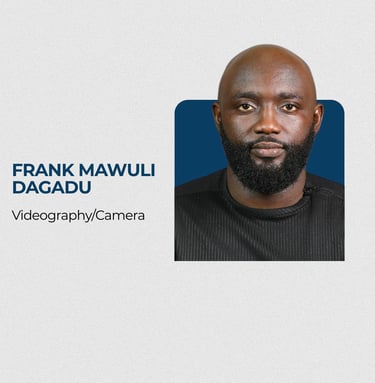
Frank Mawuli Dagadu is a practising filmmaker and tutor at the University of Media, Arts and Communication – Institute of Film and Television (UNIMAC–NAFTI). With over a decade of experience in Ghana’s film and media ecosystem, he has worked across multiple creative and technical roles, including producer, director, assistant director, scriptwriter, script supervisor, camera operator, and production coordinator.
Throughout his career, Frank has collaborated with a wide range of local and international organisations, among them Sunny Productions, AfriWomen Network, the African Channel (Ghana Bureau), Graft Foundation, the University of Ghana School of Languages, Ice Bag Multimedia, Asaase Inscriptions, Footsteps Studio, FireBeads Media, and Farmhouse Productions. His work spans documentaries, short films, television series, educational dramas, and feature films, contributing to impactful storytelling across diverse formats.
Beyond production and academia, Frank is passionate about developing emerging talent. From 2015 to 2024, he served as a volunteer festival coordinator and media liaison for the Benpaali Young Filmmakers Festival, where he played a key role in nurturing and promoting the next generation of Ghanaian filmmakers.